
Low water pressure in a Johannesburg home can have several causes. Before replacing a tap or buying a booster pump, establish whether the problem affects one fixture, the whole property or neighbouring homes. A few observations can help separate a local plumbing restriction from a wider supply issue.
You do not need to dismantle fittings to collect useful information. Start with when the change began, which outlets are affected and whether hot and cold water behave differently.
Compare the affected outlets
Use normal household operation only, and stop if you notice leaking or flooding. A weak flow at one basin while other taps run normally points towards a more local issue. Reduced flow throughout the home needs a broader assessment.
- One tap: note whether both hot and cold are affected.
- Hot water only: tell the plumber it appears limited to the hot-water system; do not adjust geyser valves.
- All outlets: check whether the change started after an outage, repair or work on the property.
- Only during simultaneous use: explain which fixtures were running together.
Flow and pressure are related but are not identical measurements. A tap that fills a bucket slowly does not by itself identify a pressure fault. A plumber may need suitable measurements and an inspection of the installation.
Check the local supply before assuming an internal fault
Look for notices through Johannesburg Water’s official channels and ask nearby households whether they are experiencing the same change. Use the notice for your actual area; an outage elsewhere in Johannesburg does not explain every household problem.
In a complex, contact the managing agent about shared tanks, pumps or planned work. A building’s internal supply arrangements can differ from a free-standing house. Do not adjust communal equipment or municipal valves yourself.
Tell the plumber about tanks, filters and recent work
If your property has a backup tank, pump, filtration unit or pressure-control equipment, mention it when booking. Keep any model details and service records available. A change after maintenance can be an important clue, but it does not establish that a particular component is faulty.
Also mention recent renovations, a new appliance connection or a water shut-off. Rather than turning unfamiliar valves experimentally, describe their location and ask the plumber to check the system.
Could a hidden leak be involved?
Reduced flow together with unexplained water use or dampness warrants investigation. Check accessible areas for visible water and record any meter observations. A leak is only one possibility; a restriction or supply interruption can produce different symptoms that feel similar at a tap.
Our guide to hidden water leaks and meter checks explains what a simple observation can and cannot tell you. If water is near electrical fittings or flooding is spreading, keep clear and seek urgent assistance.
Avoid choosing equipment before diagnosing the cause
A booster pump is not a universal answer to poor flow. The installation needs to suit the available supply and household system. Ask for the cause to be established first, then request a written explanation of any proposed equipment, maintenance needs and installation requirements.
For an appointment, prepare a short timeline, the affected fixtures, your suburb and details of any supply notices. That is more helpful than a guessed diagnosis and can make the initial assessment more focused.
Arrange a household plumbing assessment
Academy Plumbers assists with plumbing services in Johannesburg. Call 066 497 8176 or send an enquiry. Describe whether the weak flow affects one tap or the entire property so the team can discuss the next step.
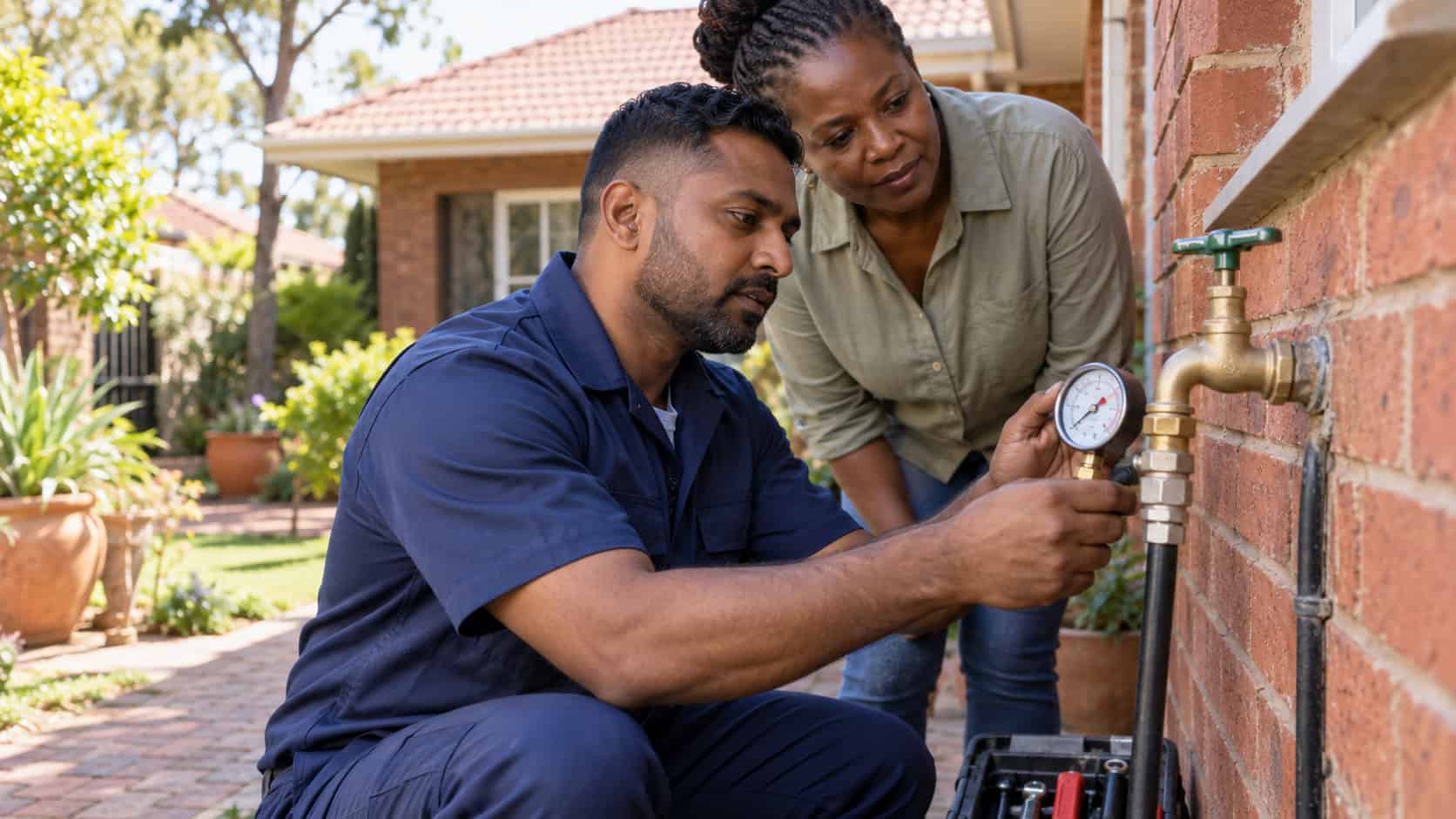
Featured image: AI-generated illustration of a water-pressure assessment.