
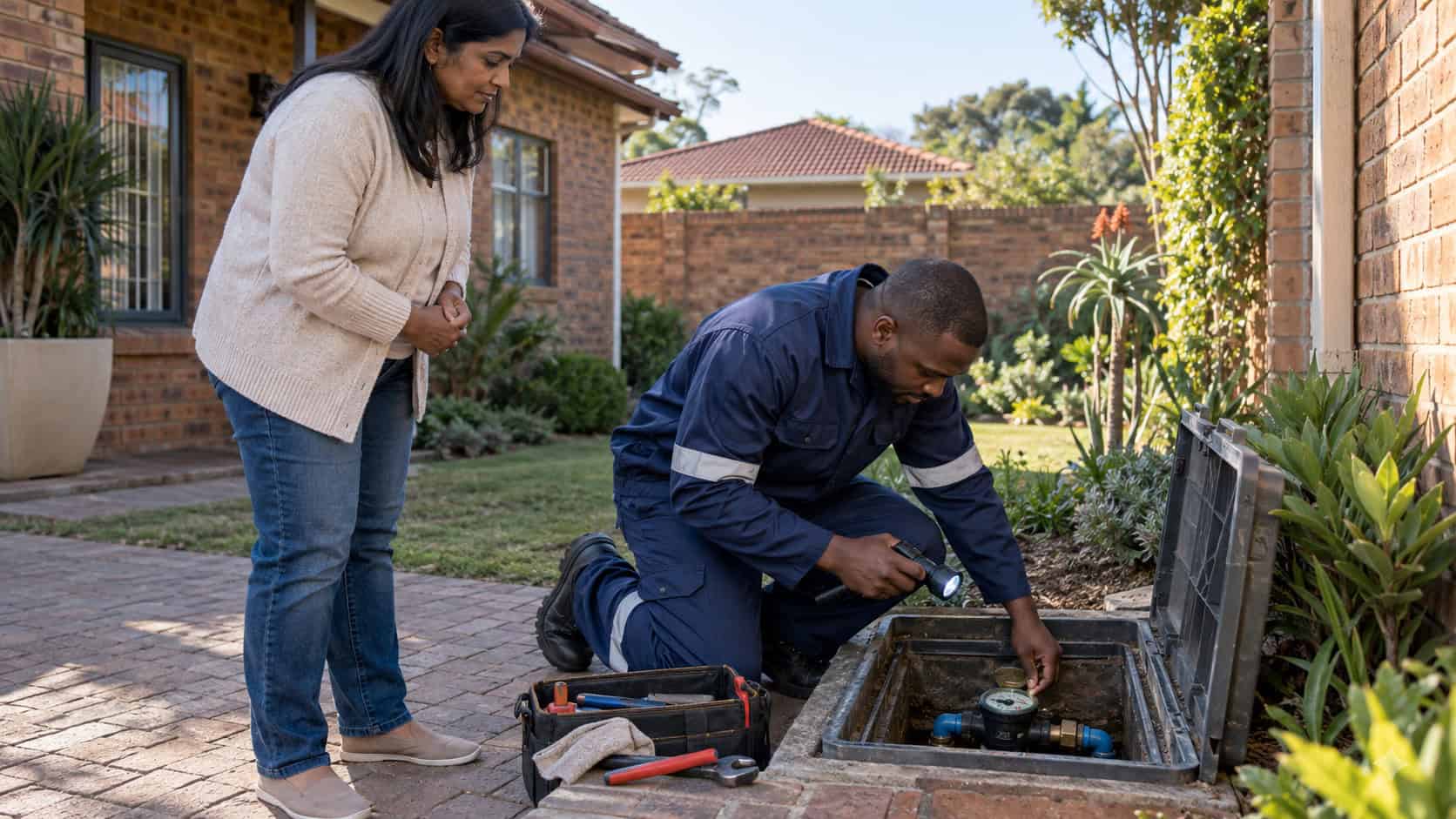
A rising water bill, a damp patch that returns or the sound of running water when every tap is closed can point to a hidden leak. In a Johannesburg home, the first useful step is to establish whether water is being used when you expect everything to be off. A meter check can help, but it cannot tell you exactly where a leak is or rule out an intermittent problem.
This guide helps homeowners in Randburg, Sandton, Fourways and the surrounding Johannesburg suburbs gather useful information before arranging professional leak detection.
Look for a pattern, not one isolated symptom
Peeling paint, a musty cupboard or a patch of unusually wet soil deserves attention. However, dampness may also come from rainwater, drainage or waterproofing problems. Note whether the patch changes after rain, after a shower or while no fixtures are being used. That timing helps a plumber choose what to investigate.
- Indoors: look around accessible basin connections, toilet cisterns and kitchen cupboards without removing panels.
- Outdoors: check visible pipework and areas near irrigation or pool top-up equipment.
- At the bill: compare the consumption period and whether readings are actual or estimated. A billing change alone does not prove a leak.
How to make a useful water-meter check
Only inspect a meter that is safely accessible. Do not open sealed fittings, alter municipal equipment or enter a flooded meter box.
- Tell everyone at home that you are checking water use. Turn off taps and pause appliances that draw water.
- Allow toilet cisterns to finish refilling. Account for automatic irrigation, water-treatment equipment and tanks that may refill without an obvious tap running.
- Photograph the meter reading and record the time.
- Leave a quiet interval with no intended water use, then photograph the reading again. Record the length of the interval.
- If the reading advances, first check whether an appliance or tank explains it. If it does not, arrange an inspection.
In a townhouse complex, establish whether you are reading your unit’s meter or a shared supply. A shared meter can move because another home is using water. Ask the managing agent before touching shared valves.
What the result can and cannot tell you
Unexplained movement suggests water is passing through the meter. It does not identify the damaged pipe, establish who is responsible or prove that digging is needed. A stationary meter also does not exclude a waste-pipe leak, waterproofing failure or a leak that occurs only when a fitting is used.
For example, a damp patch that appears only after using a shower needs a different investigation from a meter that moves continuously overnight. Keep both observations rather than assuming they have the same cause.
When to stop checking and call for help
Water near electrical fittings, a bulging ceiling or rapidly spreading flooding needs urgent attention. Keep people away from the affected area. Do not touch wet switches or stand beneath a sagging ceiling. Close a familiar, safely accessible private water shut-off only if you can reach it without risk, and arrange professional assistance.
For a slower suspected leak, send the plumber your suburb, photographs, the meter observations and details of recent plumbing work. Ask how the investigation will be priced, which detection methods may be suitable and whether locating the leak and repairing it are separate parts of the quote.
Arrange leak detection in Johannesburg
Academy Plumbers can help investigate suspected household leaks and discuss the next step. Call 066 497 8176 or request a plumbing assessment. If the problem is a visibly dripping tap or connection, see our tap and leak repair services.
Featured image: AI-generated illustration of a plumbing inspection, not a photograph of a customer job.