
An outside drain that clears and then blocks again needs more than another quick attempt to push the water away. Repeated blockage may involve accumulated material, an obstruction further along the line or damage that ordinary clearing cannot resolve. The useful question is not just “Can it be opened?” but “Why is the problem returning?”
For homes in Johannesburg, start by noting which fixtures are affected and whether the overflow follows household water use or rainfall. That distinction helps a plumber investigate the right drainage system.
One slow fixture or several?
If only the kitchen sink drains slowly, the problem may be close to that fixture. If toilets, showers and outside gullies react together, the obstruction may be further downstream. These are clues, not a diagnosis. Do not continue running taps or flushing toilets to test an already overflowing system.
Record whether the problem is constant, happens during heavy use or appears after rain. In a complex, ask whether neighbouring units are affected and notify the managing agent. Shared drains and municipal infrastructure need the correct access arrangements.
Common reasons for recurring blockages
- Material left in the line: grease and other deposits may restrict the pipe even after water starts moving again.
- Unsuitable items entering drains: wipes, sanitary products and cooking fat should not be disposed of through household wastewater pipes.
- Roots or damaged joints: an inspection may be needed to establish whether roots or structural defects are involved.
- A problem beyond the first access point: clearing the nearest opening may not address the whole affected section.
Do not assume that a nearby tree proves root damage. Equally, a drain that runs freely for one afternoon has not necessarily had its underlying problem resolved.
What you can do safely while arranging help
Keep children and pets away from overflow and avoid contact with wastewater. Reduce use of the affected fixtures. Photograph the situation from a safe position and note any previous clearing dates or repair reports.
Do not climb into chambers, reach into a blocked drain or mix drain chemicals. Tell the plumber if any product has already been used. Avoid opening heavy covers yourself; apart from lifting injuries, an opening creates a fall hazard.
Ask for a method that suits the pipe
A professional may recommend rodding, high-pressure cleaning or an inspection depending on the access, pipe condition and suspected obstruction. More force is not automatically a better solution. Ask what the method is intended to remove and how the plumber will check the result.
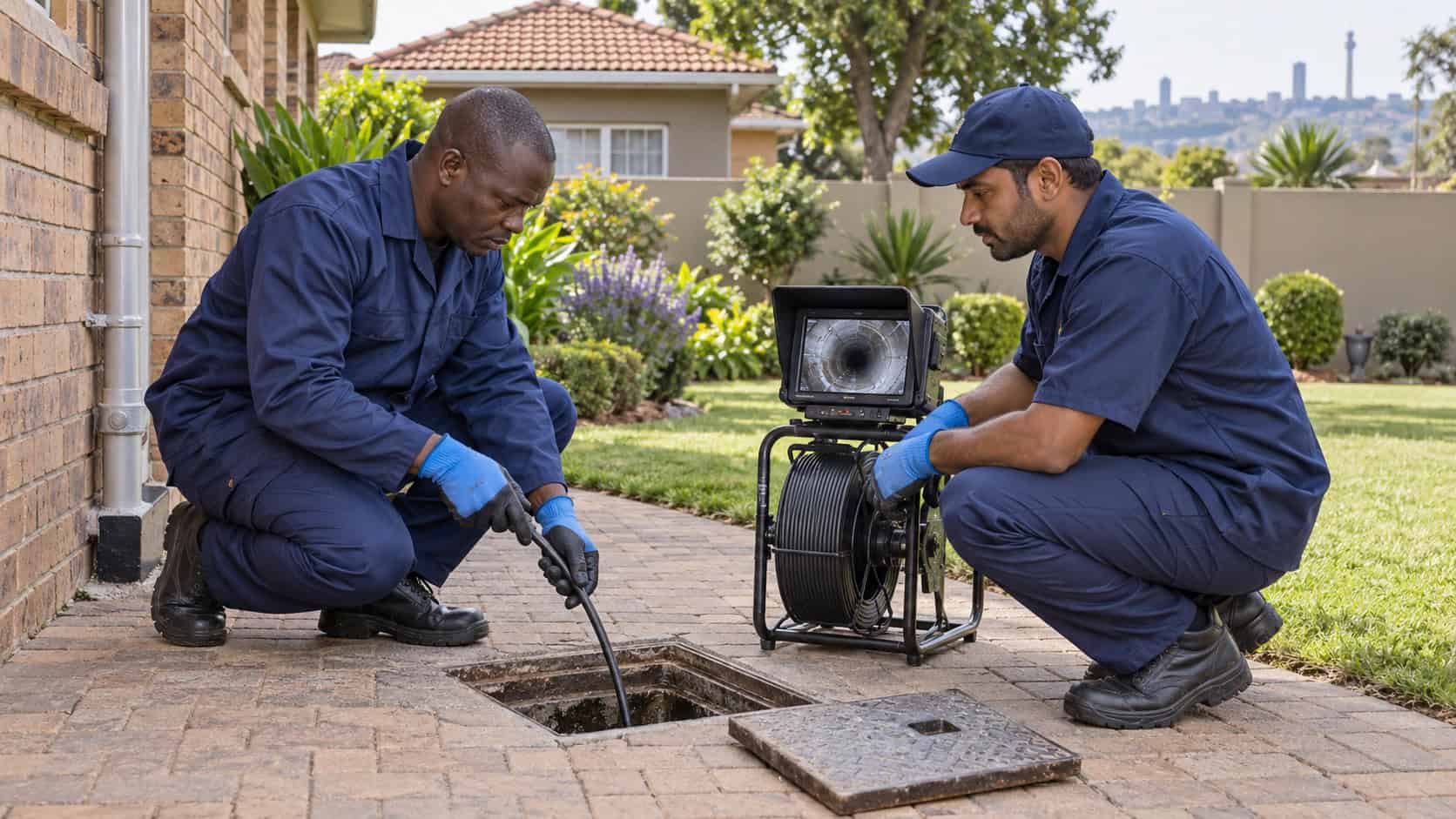
Where repeated blockage or suspected pipe damage warrants a camera inspection, ask what can realistically be seen. A camera may not provide a clear view through standing dirty water or an uncleared obstruction. If a defect is found, request a location and explanation before approving excavation.
Keep a simple drain history
A record of the affected fixtures, dates, photographs and work completed can prevent each call-out from starting from scratch. Ask for the findings in writing, including whether the cause was confirmed or only suspected. Keep any inspection images with the report.
For landlords and managing agents, also record which unit reported the issue and what access was available. That information helps distinguish a recurring shared-line problem from separate fixture faults.
Book drain assistance in Johannesburg
Academy Plumbers offers blocked drain services. Call 066 497 8176 or request assistance with your suburb and symptoms. You can also read about high-pressure drain jetting before discussing the appropriate method.
Featured image: AI-generated illustration of a drain inspection.