
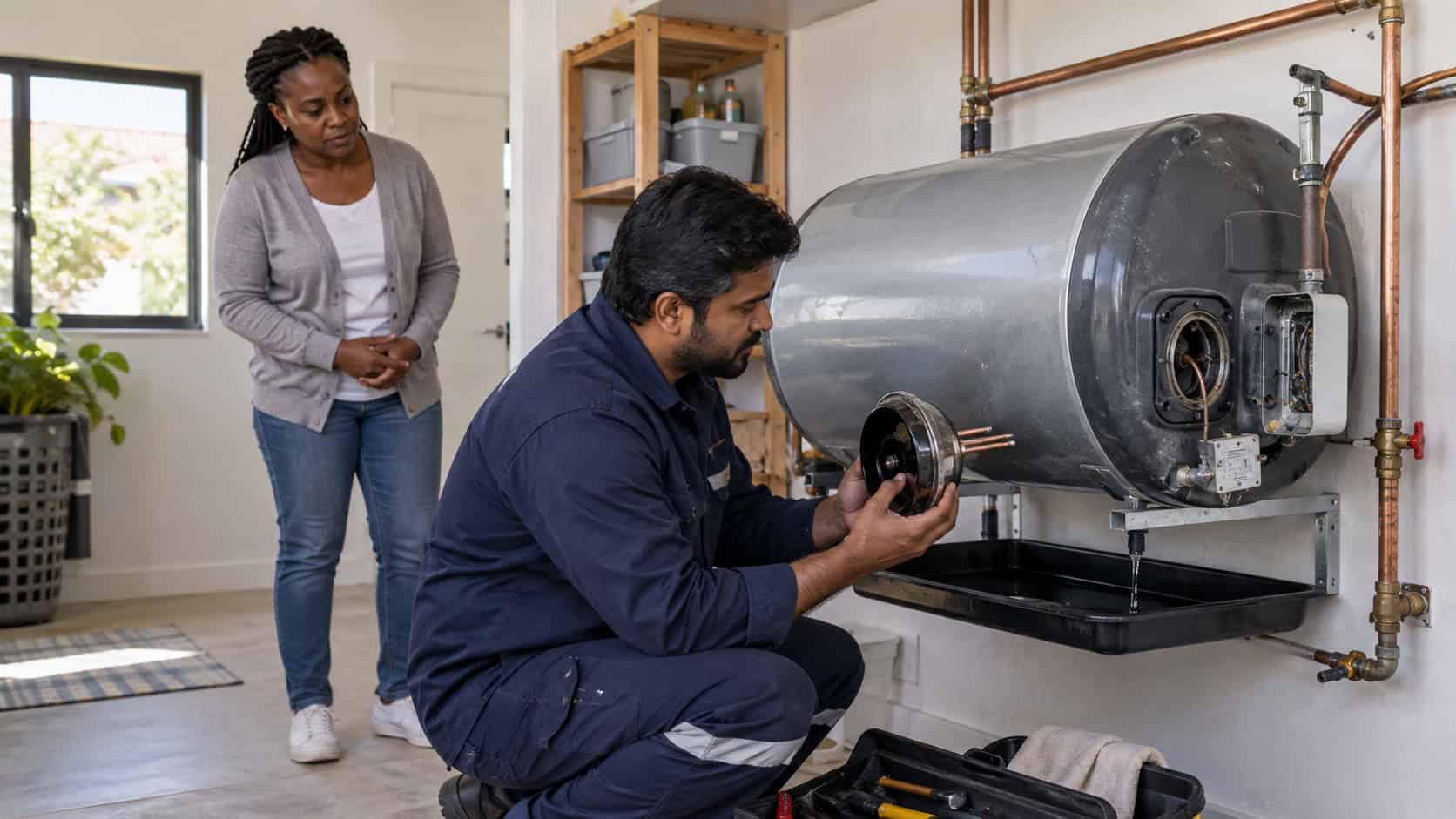
If your geyser is leaking, treat water near the electrical supply or a wet ceiling as an urgent problem. Keep people away and arrange professional help. A drip from an external discharge pipe and water escaping from the cylinder are different symptoms, so a useful assessment starts with where the water is appearing.
For Johannesburg homeowners, this is a guide to recognising the problem and communicating it clearly. It is not a set of instructions for opening or repairing a pressurised hot-water system.
Is it the cylinder, a pipe connection or a discharge pipe?
From a safe position, note what you can actually see. Water below a geyser does not automatically prove the cylinder has failed; it may have travelled from a nearby connection. Likewise, a dripping pipe outside the house should not simply be plugged because it is wasting water.
- Water from the cylinder or ceiling: arrange urgent assessment, particularly if the wet area is growing.
- A visible connection dripping: photograph it if accessible, but do not tighten unknown fittings on a hot system.
- A discharge pipe running: tell the plumber whether it drips intermittently or flows continuously, and whether this changes during heating.
Make the area safe before collecting details
Kwikot’s guidance for a burst geyser advises switching off its electrical supply and closing the water supply. Only approach an accessible, dry distribution board or familiar shut-off if doing so is safe. Never touch wet electrical equipment, climb into a wet roof space or stand beneath a sagging ceiling. If you cannot isolate the system safely, keep clear and request urgent help.
Do not block a safety discharge, remove a valve or restore power to an uncertain system. Ask the attending professional when it is safe to use the geyser again. You can read the manufacturer’s burst-geyser safety guidance for further context.
What to tell the plumber
A short, accurate description is more useful than diagnosing the fault over the phone. Include your Johannesburg suburb and the following details:
- Where you first noticed the water and whether it is still flowing.
- Whether the geyser is in a ceiling, cupboard or accessible utility area.
- Any change in hot-water supply, unusual sounds or recent work.
- The make, age and serial information only if already known or safely visible.
- Access arrangements for a complex, tenant or property manager.
Photographs can help the plumber prepare, but do not delay urgent assistance to obtain them. In a sectional-title property, notify the managing agent so access and responsibility can be checked. Keep an incident record and consult your own insurer about its process; do not assume any particular repair is covered.
Ask for a clear repair or replacement explanation
Before approving work, ask what has failed, what the proposed work includes and whether replacement parts are suitable for the unit. If replacement is recommended, request the reason rather than deciding on price alone. The quote should distinguish the cylinder, fittings, labour, access work and any electrical work that requires an appropriately qualified person.
A useful handover explains the completed repair, any remaining concerns and the maintenance or warranty information relevant to the installed equipment. Keep the invoice and product details with your household records.
Geyser help in Johannesburg
Academy Plumbers provides geyser installation and repair services. Call 066 497 8176 or contact the team with your suburb and symptoms. If the water source is unclear, explain that when booking so the appropriate investigation can be discussed.
Featured image: AI-generated illustration, not a photograph of a customer installation.