
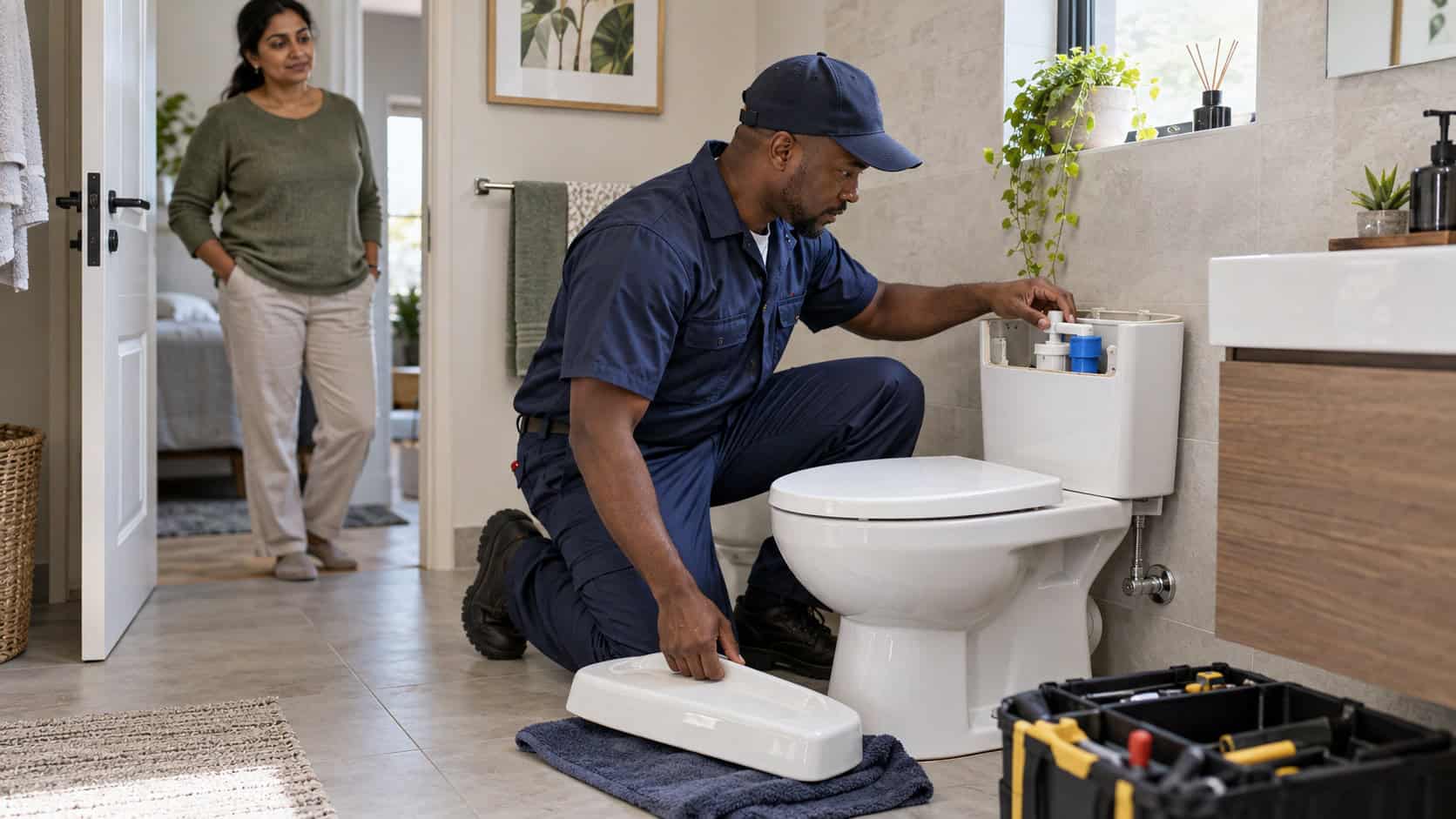
A toilet that keeps running after the cistern should have refilled deserves attention. Sometimes the sound is obvious; sometimes water quietly trickles into the bowl between flushes. The aim is to identify the symptom and arrange the right repair, rather than repeatedly pressing the flush button and hoping it stops.
In Johannesburg homes and rental properties, a small ongoing fault can be easy to overlook because the toilet still appears usable. Keeping a record of when it happens helps a plumber diagnose an intermittent problem.
What does “running” look or sound like?
Watch the bowl once a normal flush has finished and the cistern has had time to refill. Is there continuing movement on the water surface? Does the cistern refill briefly when nobody has flushed? Does the flush button feel stuck? These observations help distinguish continuous filling from a problem that only occurs occasionally.
Also look around the base and accessible supply connection. Water escaping onto the floor is a different concern from water passing internally into the bowl. If the floor is wet, reduce use and arrange inspection instead of assuming the cistern mechanism is the only issue.
Common areas a plumber may inspect
- The inlet or fill valve: this controls water entering the cistern.
- The flush mechanism and seal: a poor seal may allow water into the bowl between flushes.
- The button or linkage: a sticking control can prevent the mechanism returning fully.
- The water level and overflow arrangement: these need to be assessed for that cistern’s design.
Different toilets use different mechanisms. A concealed cistern, dual-flush unit and older exposed cistern may need different parts and access. A generic replacement bought before diagnosis may not fit.
Keep checks simple and avoid damage
Make sure the flush control has returned normally, without forcing it. If the toilet has a familiar, accessible isolation valve, a plumber can advise whether temporarily isolating that toilet is appropriate until repair. Do not force a seized valve or dismantle fittings to stop the sound.
A heavy ceramic lid can crack if dropped, and some lids are connected to the flush control. If you are unsure how it is secured, leave it in place. Do not remove tiles or concealed-cistern access panels without knowing the correct procedure.
Useful information for the repair visit
Send a photograph of the whole toilet and any safely visible make or model details. Describe whether the fault happens after every flush or only sometimes. Mention recent repairs and whether the issue affects another toilet in the property.
For a rental home, report the fault promptly to the landlord or managing agent and agree access arrangements. If you have noticed a rise in metered consumption, retain the readings, but do not assume this one fault explains the entire bill.
Check the result after repair
Ask the plumber to demonstrate that the cistern refills and then stops, that the flush works properly and that accessible connections remain dry. For an intermittent fault, agree what to observe over the next few uses and whom to contact if the symptom returns.
Keep the invoice and part details. A good repair record is particularly useful where several similar toilets are installed across a home or managed property.
Book a Johannesburg plumbing repair
Academy Plumbers can assess household plumbing faults. Call 066 497 8176 or request a repair visit. See our plumbing services and, if water use remains unexplained, our guide to hidden water leaks.
Featured image: AI-generated illustration of a toilet assessment.